
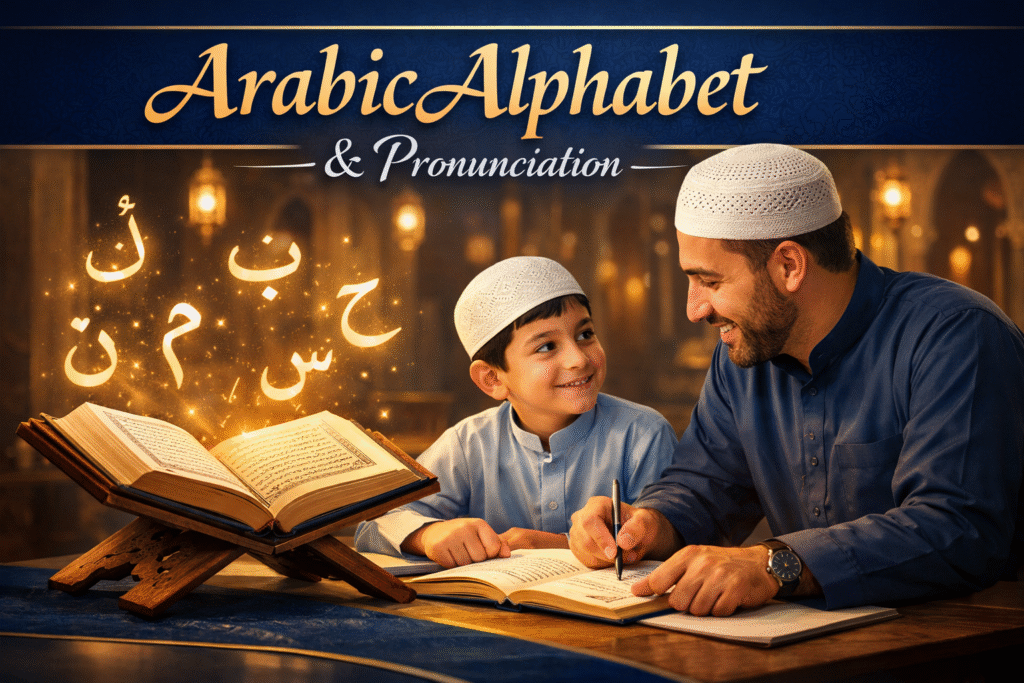
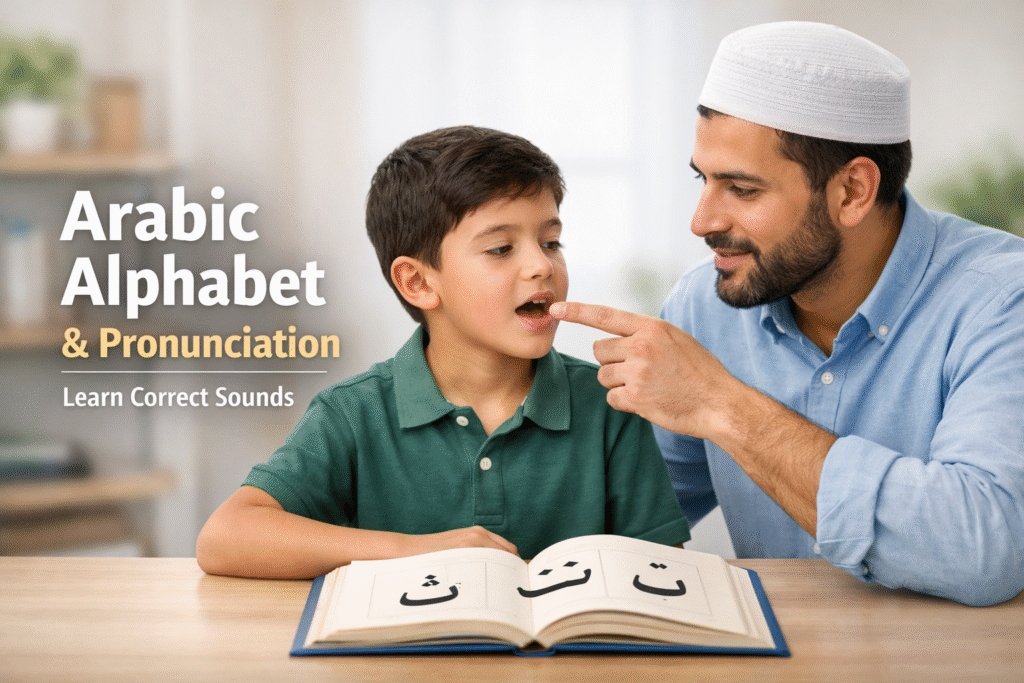
Arabic Alphabet and Pronunciation
Learning the Arabic alphabet and pronunciation is the very first and most important step for anyone who wants to read the Holy Quran correctly. Whether you are a child, an adult, a beginner, or a non-Arabic speaker, understanding Arabic letters is the foundation of proper Quran recitation.
Arabic is a phonetic language, which means every letter has a specific sound. If the pronunciation changes slightly, the meaning of the word can also change. This is why learners should focus on correct pronunciation from the beginning.
A strong grip on Arabic letters makes later learning much easier, including Noorani Qaida, Tajweed, Quran reading, and even Arabic speaking.
What Is the Arabic Alphabet?
The Arabic language contains 28 basic letters. Unlike English, Arabic is written from right to left.
Arabic letters may appear in different forms depending on where they come in the word:
- Beginning
- Middle
- End
- Standalone
For example, the letter ب (Baa) changes shape when joined with other letters, but its sound remains the same.
This system may look difficult at first, but once learners practice the shapes repeatedly, it becomes easy and natural.
Why Correct Pronunciation Matters
Correct pronunciation is extremely important in Quran recitation because small sound changes may completely alter the meaning of a verse.
For example, the difference between س and ص may sound minor to beginners, but both letters have distinct meanings and articulation styles.
- Improves Quran recitation accuracy
- Builds a strong Tajweed base
- Prevents reading mistakes
- Improves speaking and listening
- Boosts confidence in reading Arabic
- Helps memorization of Surahs
Categories of Arabic Letters by Sound
1) Throat Letters
Some Arabic letters originate from the throat. These are often difficult for non-native speakers because similar sounds may not exist in English.
- ء Hamza
- ح Haa
- ع Ain
- غ Ghain
- خ Khaa
These letters require repeated listening and teacher correction.
2) Tongue Letters
Most Arabic letters are produced using the tongue.
- ت Taa
- د Daal
- ر Raa
- ل Laam
- ن Noon
Correct tongue placement helps in fluency and clear articulation.
3) Lip Letters
Some sounds are created mainly through lip movement.
- ب Baa
- م Meem
- و Waw
- ف Faa
Short Vowels and Their Role
Arabic letters become meaningful when combined with short vowels known as Harakaat.
- Fatha ( َ ) → a sound
- Kasra ( ِ ) → i sound
- Damma ( ُ ) → u sound
Examples:
- بَ = Ba
- بِ = Bi
- بُ = Bu
These small marks are extremely important because they decide the exact pronunciation of words.
Common Challenges for Beginners
Most learners face a few common issues in the beginning:
- Confusing similar letters like س / ص
- Difficulty with throat letters
- Heavy and light sound confusion
- Applying English accent patterns
- Forgetting short vowels
- Improper joining of letters
Best Method to Learn Arabic Alphabet Fast
The best way is to learn step by step instead of rushing directly into Quran reading.
- Learn letters individually
- Practice sounds with audio
- Use Fatha, Kasra, Damma
- Join letters into words
- Practice short exercises
- Get teacher correction
- Revise previous lessons daily
This gradual method helps learners develop confidence and fluency.
Role of Noorani Qaida
Most beginners start their journey with Noorani Qaida, which is one of the best books for learning Arabic alphabet pronunciation.
It teaches:
- Letter recognition
- Joining letters
- Short vowels
- Sukoon
- Madd
- Basic Tajweed
- Quran reading preparation
It is highly recommended for children and adults.
Who Should Learn This?
- Children age 5+
- Adults learning Quran
- Non-Arabic speakers
- Parents teaching children
- New Muslims / reverts
- Beginners with zero knowledge
Daily Practice Tips for Faster Learning
- Practice every day for 15 minutes
- Repeat difficult letters 5–10 times
- Listen to a qualified Qari
- Focus on Makharij
- Use Noorani Qaida daily
- Revise old lessons before new ones
Short but regular sessions are much more effective than irregular long sessions.
How Arabic Letters Change Their Shape
One unique feature of the Arabic alphabet is that many letters change their shape depending on where they appear in a word. A letter can look different at the beginning, middle, end, or when written alone.
For example, the letter ب (Baa) changes like this:
- ب → isolated
- بـ → beginning
- ـبـ → middle
- ـب → end
Understanding these shape changes is extremely important because beginners often recognize a letter in one form but become confused when they see it in another.
Difference Between Heavy and Light Letters
Arabic contains both heavy letters and light letters. Heavy letters are pronounced with a stronger sound, while light letters are softer and clearer.
Examples of Heavy Letters
- ص (Saad)
- ض (Daad)
- ط (Taa)
- ظ (Zaa)
- ق (Qaaf)
Examples of Light Letters
- س (Seen)
- ت (Taa)
- د (Daal)
- ل (Laam)
This difference is highly important in Qur’an recitation because replacing a heavy sound with a light one may change the meaning of the word.
Why Daily Practice Is Important
Arabic pronunciation improves through consistent repetition. Even 10–15 minutes of daily practice can create a strong foundation for learners.
- Letter recognition
- Sound repetition
- Vowel practice
- Joining letters
- Listening exercises
Daily practice helps the tongue become familiar with Arabic sounds that may be new for non-Arabic speakers.
Listening Practice for Better Pronunciation
Listening is one of the most effective ways to improve Arabic pronunciation. When learners repeatedly hear the correct sound, the brain starts distinguishing between similar letters.
- س and ص
- ح and ه
- ع and ا
- ق and ك
A helpful method is to listen first, repeat second, and compare your sound with the original audio.
Mistakes Beginners Should Avoid
Many beginners make small mistakes that slow down their progress. Avoiding these mistakes can greatly improve learning speed.
- Rushing through letters
- Ignoring short vowels
- Mixing similar sounds
- Not practicing throat letters
- Skipping revision
Benefits of Learning Arabic Alphabet Early
Starting Arabic alphabet learning early gives long-term benefits for Qur’an recitation and Tajweed.
- Easier Qur’an recitation
- Better Tajweed learning
- Improved memory of letters
- Stronger pronunciation habits
- Faster word recognition
How This Helps in Tajweed
Tajweed rules depend heavily on correct pronunciation. If the learner already knows the proper sound of each letter, Tajweed becomes much easier.
- Ikhfa
- Idgham
- Qalqalah
- Madd
- Ghunnah
That is why mastering the Arabic alphabet first is considered the foundation of Tajweed excellence.
Best Resources for Beginners
To improve Arabic alphabet pronunciation, beginners can use the following helpful resources:
- Noorani Qaida
- Audio pronunciation lessons
- One-to-one online tutors
- Tajweed mobile apps
- Printable Arabic alphabet charts
Final Practical Tip for Learners
The best way to master Arabic pronunciation is to combine:
- Seeing the letter
- Hearing the sound
- Repeating aloud
- Getting correction
This four-step method helps learners progress faster and reduces pronunciation mistakes. Slow, consistent, and correct practice always gives the best results.
Final Thoughts
Mastering the Arabic alphabet and pronunciation is the strongest foundation for Quran learning. Once learners understand the letters, vowels, and articulation points, reading the Quran becomes much easier and more accurate.
With patience, daily practice, and proper guidance, anyone can learn Arabic confidently and beautifully.