
Arabic Letters with Words and Examples
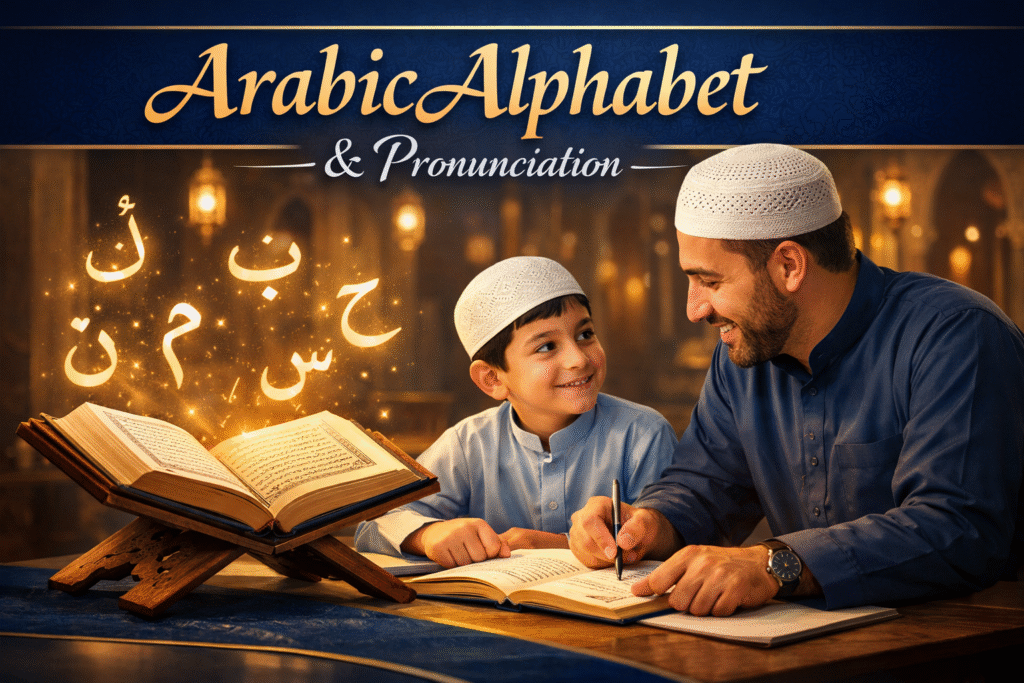
Learning Arabic letters becomes much easier when you connect each letter with a meaningful word. Instead of memorizing symbols randomly, this method allows beginners to understand pronunciation, improve memory, and start reading quickly. This guide is designed for students, kids, and beginners who want a simple and effective way to learn Arabic.
Arabic is a widely spoken language and is used in many countries around the world. It is also important for understanding religious texts and building communication skills. The best way to begin is by learning letters with examples that you can practice daily.
Why Learn Arabic Letters with Words?
- Helps you remember letters faster
- Improves pronunciation naturally
- Builds vocabulary step by step
- Makes reading easier for beginners
- Perfect for kids and self-learners
When you see a letter used in a word, your brain remembers it better compared to learning it alone. This is why most modern language courses use this method.
Arabic Letters with Easy Examples
| Letter | Sound | Example | Meaning |
|---|---|---|---|
| ا | A | أسد | Lion |
| ب | B | باب | Door |
| ت | T | تفاح | Apple |
| ث | Th | ثوب | Cloth |
| ج | J | جمل | Camel |
| ح | H | حليب | Milk |
| خ | Kh | خبز | Bread |
| ك | K | كتاب | Book |
| م | M | مدرسة | School |
| ن | N | نور | Light |
Learn Similar Letters in Groups
Grouping similar letters helps beginners avoid confusion and learn faster.
- ب ، ت ، ث → Same shape with different dots
- ج ، ح ، خ → Same base structure
- س ، ش → Similar pronunciation
This technique is widely used in schools because it simplifies learning.
Arabic Pronunciation Tips
Arabic pronunciation may feel different at first, especially for non-native speakers. However, with practice, it becomes easier.
- Repeat each letter sound clearly
- Focus on throat sounds like ح and خ
- Listen and repeat words daily
- Practice with simple words first
Consistency is the key to improving pronunciation.
Daily Practice Routine
Follow this simple routine to learn Arabic quickly:
- 5 minutes – revise letters
- 8 minutes – read words
- 10 minutes – speak aloud
Even 15 minutes daily can produce excellent results within a week.
Common Mistakes to Avoid
- Learning too many letters at once
- Ignoring pronunciation practice
- Confusing dotted letters
- Skipping daily revision
Avoiding these mistakes will help you learn faster and more effectively.
How Arabic Letters Help in Word Building
Once beginners start recognizing individual Arabic letters, the next important step is understanding how these letters combine to form meaningful words. This process makes reading much easier because students stop seeing letters as separate symbols and begin recognizing complete word patterns.
For example, when learners know the letters ك، ت، ا، ب, they can easily read the word كتاب which means book. In the same way, knowing ب، ي، ت helps in reading بيت meaning house. This method gradually develops confidence in reading short Arabic words.
Word building also strengthens memory because repeated exposure to common combinations helps the brain store patterns faster. Students who practice this daily usually improve their reading speed in a very short time.
Importance of Repetition in Arabic Learning
Repetition is one of the most powerful techniques in language learning. Arabic letters become easy only when learners revise them regularly. Reading the same letters and words multiple times improves both recognition and pronunciation.
For best results, repeat each letter with its example word at least five times. For instance, say ب – باب, ك – كتاب, and م – مدرسة repeatedly. This simple habit trains the eyes, tongue, and memory together.
Teachers often recommend spaced repetition because it helps students remember lessons for a longer period. Instead of learning many letters in one sitting, daily revision in smaller chunks gives better outcomes.
Arabic Letters in Everyday Vocabulary
Another effective way to improve learning is by focusing on daily-use Arabic words. When learners encounter words used in real life, they become more interested and motivated.
Some excellent beginner words include:
- ماء = water
- شمس = sun
- قمر = moon
- ولد = boy
- بنت = girl
- قلم = pen
- مدرسة = school
These words are easy, practical, and highly useful for strengthening vocabulary alongside alphabet learning.
How Kids Can Learn Arabic Faster
Children learn best through visual repetition and short daily activities. Instead of long lessons, parents and teachers should introduce 3–4 letters each day with one word example for every letter.
Flashcards, wall charts, and picture-word matching activities work especially well for young learners. For example, showing the letter ش with the word شمس and a picture of the sun makes the lesson more memorable.
Small achievements every day build confidence and keep kids interested in Arabic learning.
Benefits of Learning Arabic for Beginners
Arabic is one of the most important global languages. Learning it offers many educational and personal benefits. Students can improve communication, understand classical texts, and even learn related languages like Urdu and Persian more easily.
For beginners, starting with letters and words creates a strong base for grammar, sentence building, and conversation skills. Once the alphabet becomes familiar, advanced lessons feel much simpler.
This is why mastering letters through words is considered the smartest first step in Arabic education.
Simple Self-Study Strategy
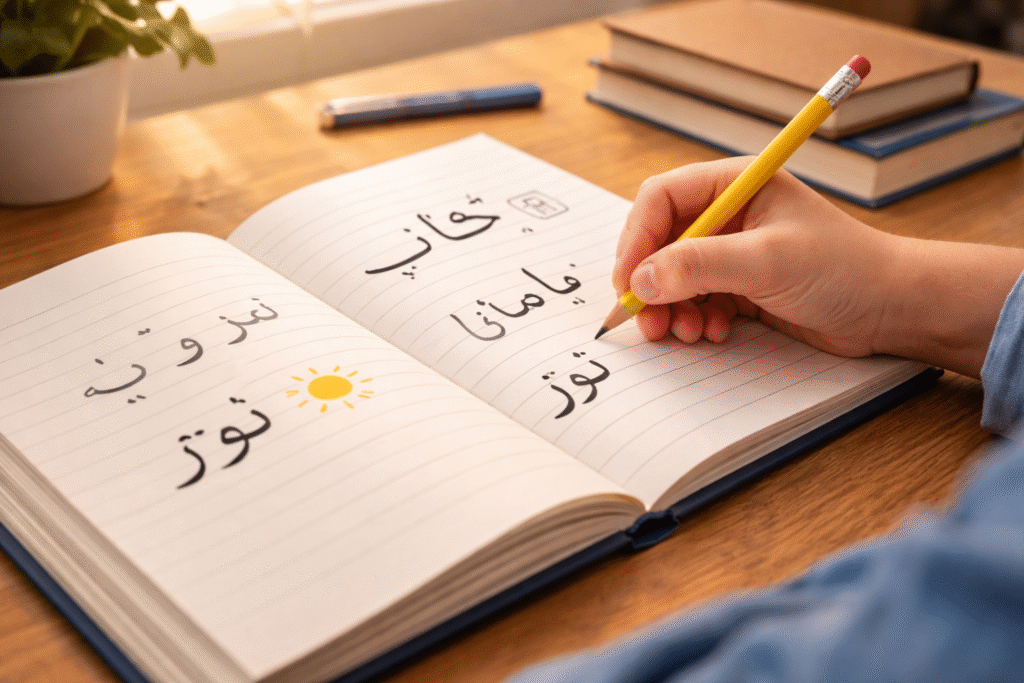
If you are learning Arabic on your own, follow a step-by-step self-study routine. First, revise five letters. Second, read five example words. Third, write each word once in a notebook. Finally, pronounce them aloud.
This balanced routine improves recognition, writing, and speaking at the same time. Self-learners who stay consistent with this strategy often notice major progress within two weeks.
The secret is not studying for long hours but practicing regularly every single day.
Final ThoughtsLearning Arabic letters with words is one of the easiest and most effective methods for beginners. It improves memory, pronunciation, and reading skills at the same time. Start with small steps, practice daily, and stay consistent. Within a short time, you will be able to recognize and read Arabic words confidently.